CodonCode Corporation
Better Software for DNA Sequencing

Restriction Cloning with CodonCode Aligner

Restriction enzyme-based cloning is a proven and widely used method for inserting DNA fragments into plasmids using specific cut sites. With CodonCode Aligner, you can streamline this process by simulating restriction digests, identifying compatible enzymes, and assembling constructs virtually. The software helps you avoid common mistakes and visualize every step of your cloning workflow, ensuring greater accuracy and efficiency before you step into the lab.

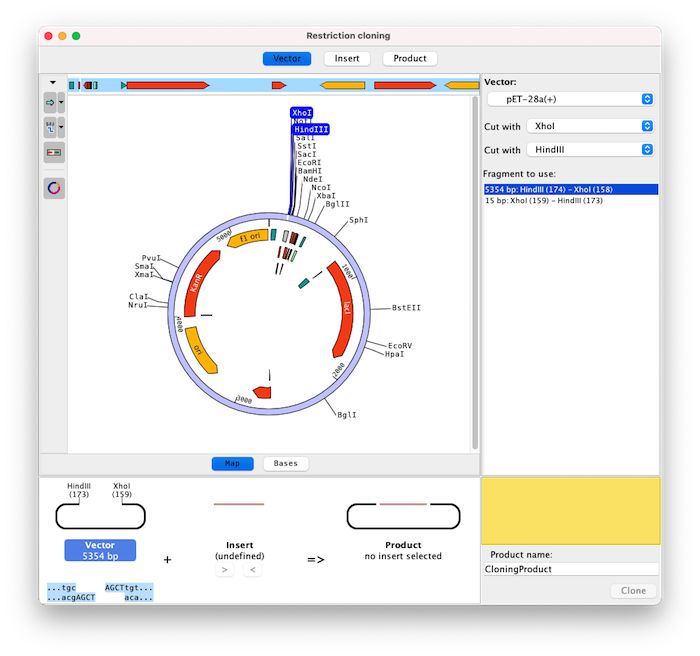
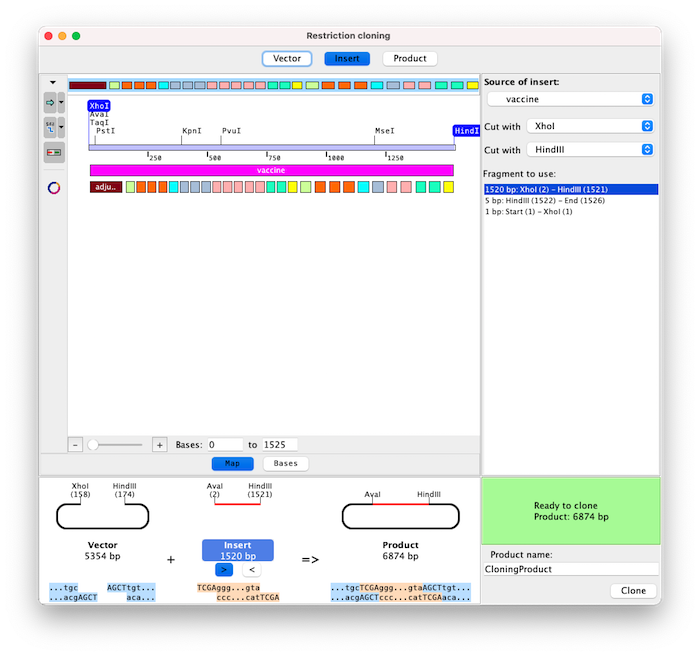
Restriction Cloning Vector Restriction Cloning Insert Restriction Cloning Product
Restriction Cloning Vector


How Restriction Cloning Works in CodonCode Aligner

Decide which enzymes to show by using different options like choosing only unique cutters or selecting your custom enzyme list. Simply select cut sites by clicking on enzymes, or select part of the sequence by clicking on a feature. You can also go back directly to the bases in the cloning view.

The bottom section shows the selected region's overhangs and how vector and insert fit together to form your cloning product. Looking at the bases and highlighting the reading frame in your product makes it easy to see if your clone is in frame:
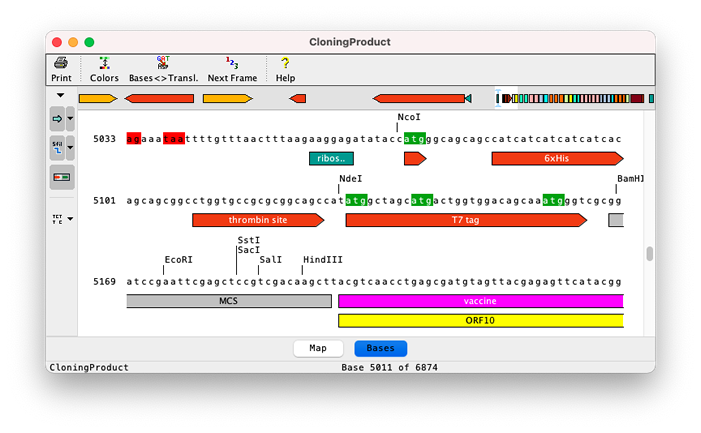
View of annotation features in a virtual cloning product

To learn more about restriction cloning in CodonCode Aligner, look at the restriction cloning tutorial, and check out our detailed how-to guide for simulating a restriction cloning workflow.


Best Practices and Tips for Restriction Cloning in CodonCode Aligner

For successful restriction cloning, precision in planning and enzyme selection is key. Here are some essential best practices to help you design clean, efficient cloning workflows — and how CodonCode Aligner can assist in getting it right the first time.

  • Restriction Enzymes
    Choose restriction enzymes with compatible ends (e.g., sticky or blunt) to ensure proper ligation and insert orientation. The cloning wizard will flag potential erros and warn you if you do have incompatible cut sites on insert and vector.
  • Use Unique Cut Sites
    Verify that restriction sites are unique in both the vector and insert to avoid unwanted cuts. To achieve this use Aligner's option to show only enzymes that have unique cut sites.
  • Digest Conditions
    Use enzymes with compatible buffer conditions when performing double digests to avoid reduced activity.
  • Dephosphorylate The Vector
    Dephosphorylate the vector after digestion to reduce background from self-ligation.
  • Use Virtual Gels
    Run digests and ligations on a gel in silico to visualize expected outcomes and troubleshoot problems in advance. Aligner lets you create virtual gels for one or several fragments.


Explore Other Cloning Methods and Features in CodonCode Aligner

CodonCode Aligner supports a several molecular cloning techniques beyond restriction cloning. Explore these additional pages to learn how Aligner helps you design, simulate, and verify different cloning workflows:

  • Gibson Assembly
    Seamless DNA assembly without the need for restriction enzymes — ideal for multi-fragment cloning and scarless constructs.
  • TA Cloning
    Learn how to simulate TA cloning and verify insert orientation before going to the bench.
  • Directional TOPO Cloning
    Learn how to simulate directional TOPO cloning and verify insert orientation before going to the bench.
  • Blunt-End PCR Cloning
    Plan and test blunt-end ligation of PCR products and vectors, with annotation and map preview features.
  • Molecular Cloning
    Overview of virtual molecular cloning methods in CodonCode Aligner.
  • Primer Design
    Design primers using Primer3. Adjust parameters like primer characteristics and reaction conditions to create PCR, cloning, and sequencing primers that specifically match your workflow.
  • Virtual Gels and RFLP Analysis
    Use virtual gels to verify your insert. You can look at restriction maps and virtual gels for single sequences, or even compare multiple sequences (for example your cloning product in both directions) using the RFLP analysis tool in Aligner.